
Google DeepMind acquiert l'équipe Hume AI : Licensing + talent raid pour voice AI émotionnelle
Google DeepMind renforce sa position dans le voice AI avec un "acqui-hire inversé" : CEO Alan Cowen et 7 ingénieurs clés de Hume AI rejoignent l'équipe, accompagnés d'un deal licensing pour leurs modèles d'émotions vocales. Annoncé le 22 janvier 2026, ce mouvement cible Gemini voice vs ChatGPT Advanced Voice.
Contexte Hume AI
Hume AI, startup voice AI (fondée 2021), excelle en reconnaissance émotionnelle vocale (ton, stress, joie via spectrogrammes + psychologie). PhD Alan Cowen (psychologie) a levé $74M (A16Z, Founders Fund). Prévisions : $100M CA 2026 via licensing vers labs AI. Empath Voice Interface (2024) : assistant conversationnel adaptant réponses à l'humeur détectée.
Détails Deal DeepMind
- Talent : Cowen + ~7 ingénieurs → intégration Gemini 2.0 voice (Q2 2026).
- Licensing : Hume fournit modèles EVI (Emotional Voice Intelligence) à DeepMind + autres labs. Pas d'acquisition totale (évite FTC scrutiny).
- Objectif : Gemini détecte émotions (frustration → reformulation patiente) pour concurrencer OpenAI GPT-4o voice, Siri 2026 (Gemini-powered), Alexa+.
Stratégie "Reverse Acqui-hire"
Tendance 2026 : Big Tech (Google, OpenAI, xAI) recrute équipes sans racheter entités → contournement antitrust. Exemples : Google/Windsurf (2025), OpenAI/Cov+R (2025). FTC promet examen renforcé mais licensing = zone grise légale.
Implications Compétition Voice AI
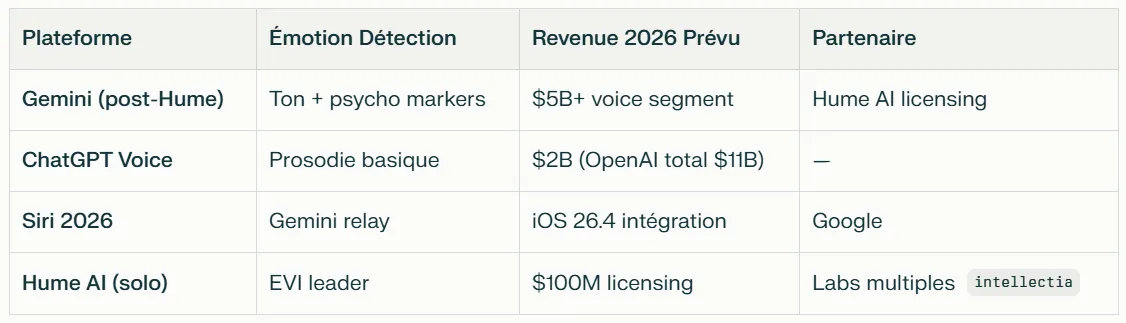
Avantage Google : Dataset vocal YouTube + Hume psycho-training → leader empathie AI. Hume persiste indépendante (revenus licensing stables).
Impact Marché B2B IT
- Call centers : Agents AI détectant stress client → escalation humaine (ROI +300% satisfaction).
- Thérapie vocale : Apps Hume/Gemini pour dépression (tonalité → intervention CBT).
- Motion design : Voice commands émotionnelles ("refais anim frustré") pour After Effects 2027.
Réactions Écosystème
- Investisseurs Hume (AEGIS Ventures) : "Voice + émotion = killer feature 2026".
- LinkedIn analysts : "Licensing = nouveau M&A. Régulations obsolètes".
- Concurrence : OpenAI accélère GPT-5 voice ; Apple Siri Q1 2026 intègre déjà Gemini base.
Perspectives Techniques
Cowen team intègre Octave model (Hume) à Gemini : spectrogramme → embeddings émotionnels → réponse adaptative. Exemple : "Ton fatigué détecté → raccourcis explication". Dataset training : 10M+ heures voix annotées psycho (vs ChatGPT 1M heures prosodie). Déploiement : Android Auto/Gemini Live mars 2026.
Risques Régulation
FTC classe ces deals "acqui-hires déguisés". Biden admin (fin 2025) : seuils HSR revus à $50M. Google argumente "mobilité talents libre". Hume gagne visibilité licensing post-deal.
Stratégie Développeurs
- API Gemini Voice : Q2 2026, $0.01/1000 tokens + émotions.
- After Effects integration : Voice commands "style frustré → easing cubic" via Hume models.
- B2B pitch : "Émotions vocales = +25% conversion sales calls" (Hume metrics).
Ce mouvement positionne DeepMind leader voice AI empathique 2026, combinant talent Hume + infra Google. Hume survit via licensing diversifié. Concurrents doivent matcher psycho-training pour suivre.